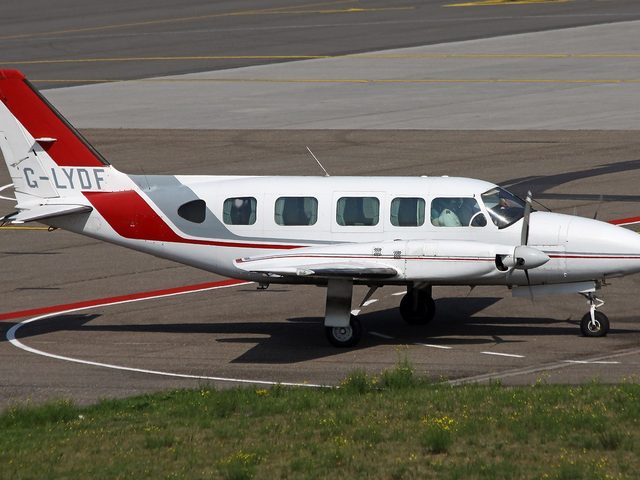
Piper Navajo Pa-31
Twin Piston· 360 globally registered
The Piper PA-31 Navajo is a twin-engine piston workhorse that defined light charter and air taxi operations from the late 1960s onward. Introduced in 1967, the Navajo filled the gap between single-engine aircraft and larger turbine twins, offering seating for six to eight passengers, counter-rotating engines for docile handling, and enough range to connect remote communities across North America, Australia, and beyond. Its rugged construction and relatively forgiving flight characteristics made it a favorite among bush operators, freight haulers, and small regional carriers who needed reliable performance on short, unpaved strips. Piper built the Navajo family in several variants (the baseline PA-31, the stretched PA-31-350 Chieftain, and the pressurized PA-31P Mojave), but the original PA-31 remains the most common. Powered by two Lycoming TIO-540 engines producing 310 horsepower each, the Navajo cruises around 200 knots and can haul useful loads exceeding 2,000 pounds, making it practical for both passenger charters and cargo missions. Its cabin is unpressurized, limiting operations to lower altitudes, but the trade-off is simplicity and lower operating costs compared to turbine alternatives. Though production ended in the early 1980s, hundreds of Navajos remain in active service worldwide, particularly in Australia, Canada, and Alaska, where their ability to operate from marginal airstrips and carry diverse payloads keeps them economically viable. The type's longevity is a testament to Piper's straightforward engineering: parts remain available, and mechanics familiar with the airframe are still common at rural airports. SkyMeter has tracked 1,532 flights across 338 airframes and 245 operators, with AIR ARCTIC INC the largest observed operator.
Safety in context
The incident rate counts flights with ANY safety event detected by SkyMeter: go-arounds (a routine response, not a failure), unstable-approach gate flags (advisory thresholds), rejected takeoffs (the system working as designed), and runway events. It is NOT an accident rate or fatality rate. For accident statistics, refer to the NTSB Aviation Accident Database (USA) or the Aviation Safety Network. See methodology for what each event type measures.
Performance
Speed envelope & approach
Dimensions
Airframe geometry
Weight & identification
Operating limits
Top operators
By fleet size · last 7 days


Safety profile
Flagged flights · last 7 days
Recent incidents
Flagged flights of PA31


Recent flights
Real flights of PA31 · airborne ≥ 20 min


