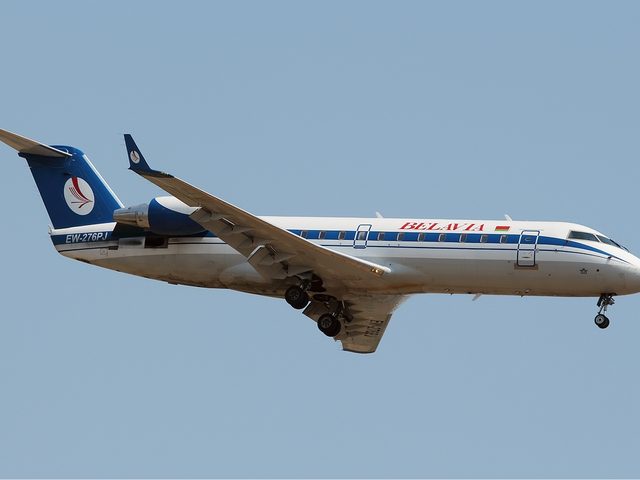
Canadair Crj-200
Twin Jet· 511 globally registered
The Bombardier CRJ200 emerged in the mid-1990s as the stretched successor to the original CRJ100, becoming the backbone of North American regional aviation for two decades. With seating for 50 passengers in typical configuration, the CRJ200 hit the sweet spot for scope-clause restrictions that limited mainline carriers' regional partners to aircraft under 50 seats, making it the workhorse of the hub-and-spoke model. Powered by twin General Electric CF34-3B1 turbofans, the type offered airlines a jet experience on thin routes that previously relied on turboprops, cruising at 41,000 feet and covering ranges up to 1,700 nautical miles. The CRJ200's high-speed cruise capability (Mach 0.81 typical, with a maximum operating limit of Mach 0.85) allowed it to slot neatly into mainline schedules, maintaining block times competitive with larger narrowbodies on short sectors. Its relatively hot approach speed of around 125 knots and short-field performance made it versatile across the diverse airport infrastructure of regional America, from major hubs to smaller spoke cities. Though production ended in 2006 as the industry shifted toward larger 70- and 76-seat jets following scope-clause relaxations, the CRJ200 remains in widespread service, particularly with operators like SkyWest who built massive fleets around the type. The aircraft's simplicity, reliability, and low acquisition costs on the secondary market have extended its operational life well beyond initial expectations, even as newer E-Jets and CRJ700/900s gradually replace it on many routes. SkyMeter has tracked 2,873 flights across 206 airframes and 35 operators, with SKYWEST AIRLINES INC the largest observed operator.
Recent in the news
All news →- Emergency landing Jul 16, 2026
Man partially sucked out of plane as broken engine smashes window - Otago Daily Times
Safety in context
The incident rate counts flights with ANY safety event detected by SkyMeter: go-arounds (a routine response, not a failure), unstable-approach gate flags (advisory thresholds), rejected takeoffs (the system working as designed), and runway events. It is NOT an accident rate or fatality rate. For accident statistics, refer to the NTSB Aviation Accident Database (USA) or the Aviation Safety Network. See methodology for what each event type measures.
Performance
Speed envelope & approach
Dimensions
Airframe geometry
Weight & identification
Operating limits
Top operators
By fleet size · last 7 days


Safety profile
Flagged flights · last 7 days
Family
Related variants
Recent incidents
Flagged flights of CRJ2


Recent flights
Real flights of CRJ2 · airborne ≥ 20 min

