Boeing 777-300
Twin Jet· 6 globally registered
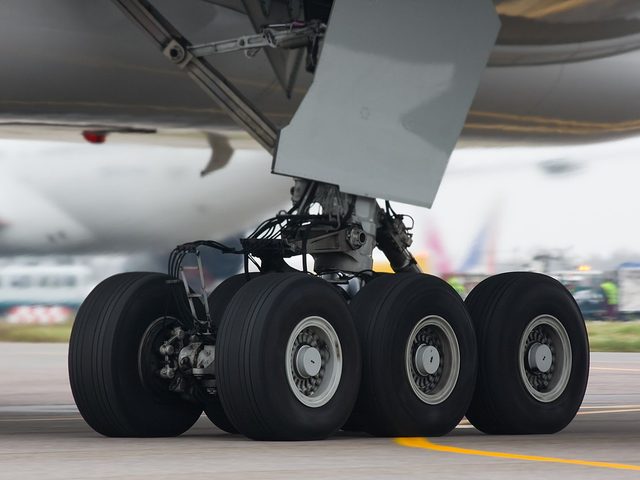
The Boeing 777-300 stretched the already-successful 777-200 by 33 feet to become the world's longest twin-engine airliner when it entered service with Cathay Pacific in 1998, seating up to 550 passengers in high-density configurations. Boeing designed the type to replace aging 747-100s and -200s on high-capacity routes where four-engine economics no longer made sense, offering airlines 20 percent lower seat-mile costs while maintaining the 777's legendary reliability and commonality benefits. The -300's fuselage length of 242 feet made it longer than the 747-100, yet it retained the same wing, engines, and flight deck as the 777-200, allowing crews to transition smoothly between variants. Powered by either GE90, Pratt & Whitney PW4000, or Rolls-Royce Trent 800 engines producing 90,000 to 98,000 pounds of thrust each, the 777-300 cruises at Mach 0.84 with a maximum range of approximately 6,015 nautical miles at full payload. Its maximum takeoff weight of 660,000 pounds and operating empty weight around 353,000 pounds reflect the structural reinforcement needed for the longer fuselage, which required additional body frames and strengthened landing gear compared to the -200. The type's fly-by-wire flight controls, advanced avionics, and folding wingtips (optional, for gate compatibility) represented the cutting edge of widebody technology in the late 1990s. While the 777-300 proved popular in Asia-Pacific markets for dense regional routes, Boeing quickly recognized that intercontinental operators needed more range, leading to the 777-300ER's launch in 2000. The baseline -300 remained in production until 2006, with just 60 aircraft delivered compared to over 800 of the extended-range variant. Today, the type serves primarily with carriers like Cathay Pacific, Korean Air, and All Nippon Airways on high-capacity regional trunk routes where its 11,120-kilometer range suffices. SkyMeter has tracked 419 flights across 29 airframes and 2 operators over routes, with Emirates (Govt. VIP Plane) the largest observed operator.
Safety in context
The incident rate counts flights with ANY safety event detected by SkyMeter: go-arounds (a routine response, not a failure), unstable-approach gate flags (advisory thresholds), rejected takeoffs (the system working as designed), and runway events. It is NOT an accident rate or fatality rate. For accident statistics, refer to the NTSB Aviation Accident Database (USA) or the Aviation Safety Network. See methodology for what each event type measures.
Performance
Speed envelope & approach
Dimensions
Airframe geometry
Weight & identification
Operating limits
Top operators
By fleet size · last 7 days

Safety profile
Flagged flights · last 7 days
Family
Related variants
Recent incidents
Flagged flights of B773


Recent flights
Real flights of B773 · airborne ≥ 20 min


