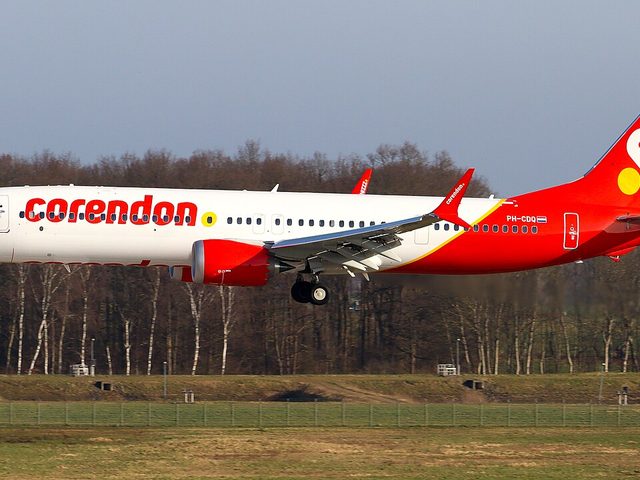
Boeing 737 Max 9
Twin Jet· 53 globally registered
The Boeing 737 MAX 9 represents the stretched member of Boeing's controversial but now operationally mature fourth-generation narrowbody family, seating 178 to 220 passengers depending on configuration. Launched in 2016 and entering service with Lion Air in 2018, the MAX 9 was grounded worldwide alongside its siblings following two fatal accidents, returning to service in late 2020 after extensive software and training revisions to its MCAS flight control system. The type competes directly with the Airbus A321neo on longer thin routes, offering a 3,550-nautical-mile range that enables transcon and transatlantic missions previously reserved for widebodies. Powered by CFM International LEAP-1B engines producing 28,000 pounds of thrust each, the MAX 9 burns roughly 14 percent less fuel per seat than the 737-900ER it replaces, thanks to advanced winglets, a redesigned tail cone, and engine efficiency gains. The aircraft cruises at Mach 0.79, climbs to a service ceiling of 41,000 feet, and operates from runways as short as 7,900 feet at maximum weight. United Airlines became the type's largest operator, using the MAX 9 as a backbone for its domestic and near-international network, while Alaska Airlines deployed it on West Coast routes before a January 2024 door-plug blowout temporarily grounded the U.S. fleet for inspections. Despite its troubled entry into service, the MAX 9 has matured into a reliable workhorse for airlines seeking range and efficiency in the 180-seat segment. SkyMeter has tracked 5,193 flights across 338 airframes and 16 operators, with UNITED AIRLINES INC the largest observed operator.
Safety in context
The incident rate counts flights with ANY safety event detected by SkyMeter: go-arounds (a routine response, not a failure), unstable-approach gate flags (advisory thresholds), rejected takeoffs (the system working as designed), and runway events. It is NOT an accident rate or fatality rate. For accident statistics, refer to the NTSB Aviation Accident Database (USA) or the Aviation Safety Network. See methodology for what each event type measures.
Performance
Speed envelope & approach
Dimensions
Airframe geometry
Weight & identification
Operating limits
Top operators
By fleet size · last 7 days


Safety profile
Flagged flights · last 7 days
Recent incidents
Flagged flights of B39M


Recent flights
Real flights of B39M · airborne ≥ 20 min