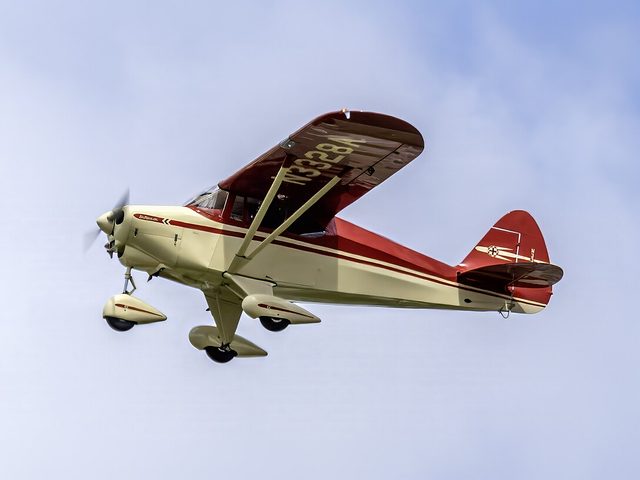
Piper 22 Tri-Pacer
Single Piston· 1,210 globally registered
The Piper PA-22 Tri-Pacer represents a pivotal moment in general aviation history as the tricycle-gear evolution of the taildragger PA-20 Pacer, making cross-country flying accessible to a generation of post-war pilots intimidated by conventional gear. Introduced in 1950 and produced through 1960, the Tri-Pacer became one of the most successful four-seat trainers and family aircraft of the 1950s, with over 9,000 built. Piper's decision to offer the nosewheel configuration (then still novel for light aircraft) proved prescient, as the forgiving ground handling characteristics opened up flying to thousands of new pilots during aviation's golden age. The type earned the affectionate nickname "Flying Milk Stool" for its boxy, fabric-covered fuselage and wide-track landing gear, though pilots appreciated the practical design: four real seats, excellent visibility through large windows, and docile flight characteristics that made it ideal for grass strips and short fields. Powered typically by 150 to 160 horsepower Lycoming engines, the Tri-Pacer cruised around 115 knots and could operate comfortably from runways under 1,500 feet. Many examples have been meticulously maintained or restored, and the type remains popular in the vintage aircraft community for its combination of utility, simplicity, and 1950s charm. SkyMeter has tracked 466 flights across 169 airframes and 164 operators, with WATTERS TIMOTHY J the largest observed operator.
Safety in context
The incident rate counts flights with ANY safety event detected by SkyMeter: go-arounds (a routine response, not a failure), unstable-approach gate flags (advisory thresholds), rejected takeoffs (the system working as designed), and runway events. It is NOT an accident rate or fatality rate. For accident statistics, refer to the NTSB Aviation Accident Database (USA) or the Aviation Safety Network. See methodology for what each event type measures.
Performance
Speed envelope & approach
Dimensions
Airframe geometry
Weight & identification
Operating limits
Top operators
By fleet size · last 7 days


Safety profile
Flagged flights · last 7 days
Recent incidents
Flagged flights of PA22


Recent flights
Real flights of PA22 · airborne ≥ 20 min


